You walked the property, you know the work, and the homeowner wants a number. Now you have to put it on paper. Learning how to write an estimate for a job isn’t about fancy software or big words. It’s about giving the customer enough clarity to say yes without hesitation, and giving yourself enough detail to do the work profitably. This guide walks through exactly what goes into an estimate that wins, in the order you should build it.
Why most estimates lose the job
The estimate that loses usually isn’t the most expensive one. It’s the one that’s confusing, slow, or vague. When a customer gets three quotes and yours is a single price scrawled on a notepad while the next contractor sent a clean breakdown the same afternoon, you’ve lost on professionalism before price ever entered the conversation.
Homeowners are nervous about being overcharged or surprised later. A good estimate kills that fear. It shows what they’re paying for, what’s included, and what isn’t, so the only thing left to decide is whether to book you.
Start with the scope, in the customer’s words
Before you price anything, write one or two sentences describing the job the way the customer would describe it. “Replace the rotted fascia on the south side of the house and repaint to match” tells them you listened. It also protects you, because it sets the boundary of what this number covers.
A tight scope statement is the single best defense against the “but I thought that was included” conversation three weeks later. If it’s not in the scope, it’s not in the price, and the customer knew that going in.
Break the price into line items
A single lump sum invites suspicion. Line items build trust. You don’t have to expose your margins, but you should show the customer the shape of the work. A few line items beat one big number every time.
A solid estimate usually breaks down into:
- Labor, by task or by the job, so they see the work involved
- Materials, listed plainly (you can roll small items into a “materials” line)
- Equipment or disposal fees, if the job has them
- Tax, calculated correctly for your area, never folded silently into the total
Consistent pricing matters here. If you charge $85 to replace a fixture on Monday and $110 on Thursday because you eyeballed it, customers notice and crews get confused. Pricing the same task the same way every time is what keeps your estimates fast and your margins predictable.
Spell out what’s NOT included
Exclusions feel awkward to write, but they’re a gift to both sides. “Does not include permit fees” or “price assumes no hidden water damage behind the wall” sets honest expectations. When you’re upfront about the unknowns, a later change order feels fair instead of like a bait and switch.
This is also where you note assumptions: access to water and power, a clear work area, who hauls away the old material. The more you decide on paper now, the fewer arguments you have on site later.
Add terms that protect your cash flow
An estimate isn’t just a price, it’s a mini agreement. Include a few plain terms so there’s no confusion when it’s time to get paid:
- Payment schedule (deposit to book, balance on completion, or progress payments for bigger jobs)
- How you accept payment (card, bank transfer, and offline options like check or cash)
- How long the estimate is valid, since material costs move
- A short note on change orders, so extra work gets approved before it gets done
A deposit term in particular does two jobs at once. It protects you from no-shows, and it gives the customer skin in the game so they take the booking seriously.
Make it look like you mean business
Presentation closes jobs. A clean document with your business name, logo, contact info, and a clear total reads as “this person is organized and will show up.” A handwritten napkin reads as “this might be a gamble.” Same price, very different impression.
Send a real PDF or a link the customer can open on their phone. Make it easy to read, easy to approve, and easy to pay. Every extra step between “yes” and “booked” is a chance for them to cool off or call a competitor.
Speed wins more than polish
The contractor who answers first usually books the job. If you can hand over an estimate while you’re still standing in the driveway, or email it that evening instead of three days later, you’ll win work you’d otherwise lose to a faster competitor. When you learn how to write an estimate for a job quickly and consistently, speed becomes your edge, not your weakness.
Then follow up. A quote sitting unanswered for a week isn’t dead, it’s waiting for a nudge. A simple “just checking in, happy to answer any questions” recovers more jobs than most contractors realize.
A quick checklist before you hit send
- Scope written in the customer’s words
- Clear line items for labor, materials, and tax
- Exclusions and assumptions spelled out
- Payment terms, deposit, and how long the price holds
- Your business name, contact info, and an easy way to say yes
How Zoop helps
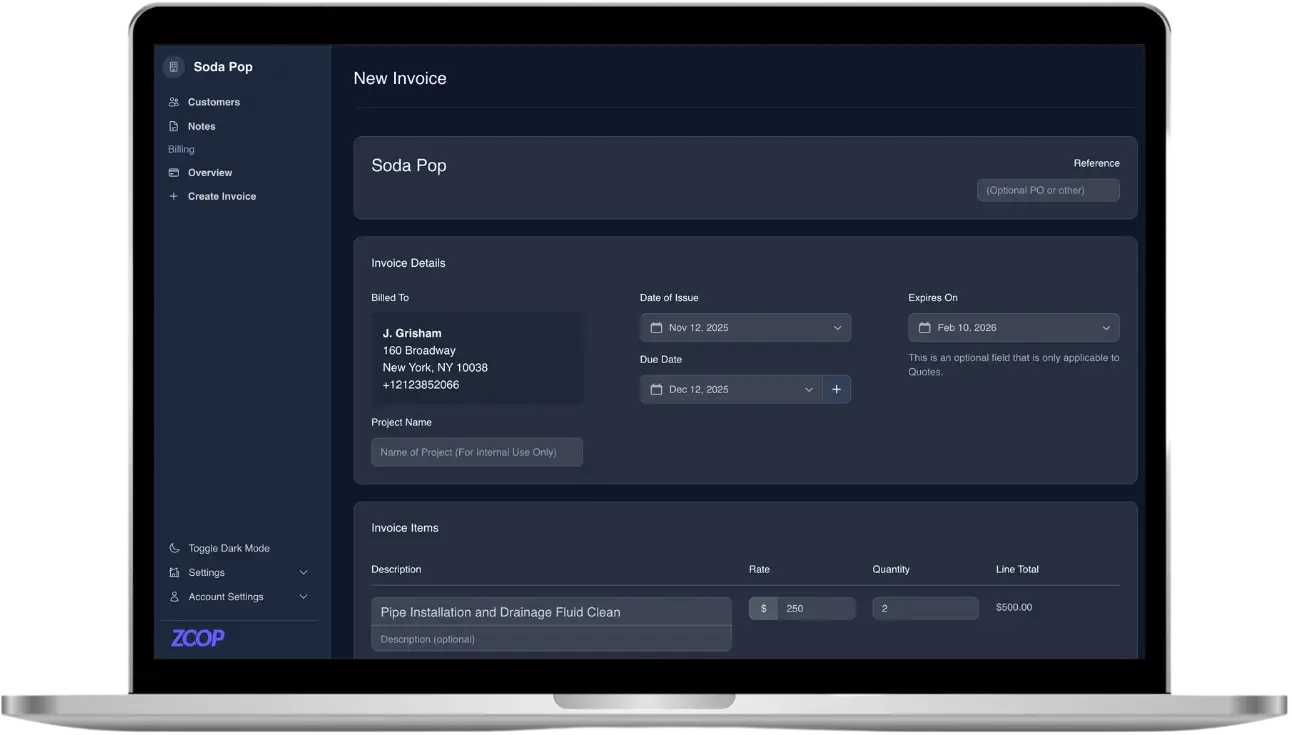
Zoop is built to make this whole flow fast. Pull line items straight from your Pricebook so every job is priced consistently, apply the right tax rate automatically, and send a professional quote as a PDF or a shareable link your customer opens on their phone. When they approve, turn the quote into an invoice in one click, no retyping. From there, customers can pay by card or bank transfer (with Apple Pay and Google Pay where available) through a secure payment link, or you can record cash, check, Zelle, Venmo, or Cash App manually. You can collect a deposit on a saved card, send automatic dunning reminders on anything outstanding, and even set up recurring invoices for ongoing work. Scheduling, dispatch, and a public booking widget are all in the same place, so the job goes from estimate to calendar to paid without leaving the app.
Zoop is free during beta. Start writing estimates that win at https://app.zoop.pro/start.