If you’ve got the license and the skills, starting your own plumbing business is the clearest path to owning your time and your income. Here’s how to start a plumbing business in seven steps — set up to get paid, not just to turn wrenches.
The short version: get your license and insurance, register the business, stock a van, set flat-rate prices, build a simple way to quote and invoice, then win customers and keep the cash flowing.
1. Get licensed and insured
Most states require a journeyman or master plumber license to operate on your own, and the rules vary by state. Carry general liability insurance, add workers’ comp when you hire, and check whether your area requires a bond to pull permits.
2. Register your business
- Form an LLC (most solo plumbers do) and get an EIN.
- Open a business bank account and keep your books separate from day one.
- Register for any local trade permits or business licenses your city requires.
3. Stock your van
Your van is your store. Carry the fittings, valves, and common repair parts you reach for every day so you’re not running to the supply house mid-job. Start with your top movers and expand from there.
4. Set flat-rate pricing
Flat-rate pricing is the standard in service plumbing for a reason: the customer approves one number before you start, and you’re rewarded for being efficient. Know your overhead per hour, then build your flat-rate book around it. Always charge a service-call fee.
5. Set up the back office
Decide how you’ll quote, schedule, invoice, and collect payment before the calls start. Doing it from a notebook works until it doesn’t — usually right when you get busy enough to forget who owes you.
6. Win your first customers
- Set up a Google Business Profile so you show up for “plumber near me.”
- Get reviews early and ask for referrals on every job.
- Build relationships with property managers and GCs for steady repeat work.
7. Keep the cash flowing
Invoice the moment the job’s done and take payment on site. Offer recurring options — drain maintenance, backflow testing — to turn one-time calls into repeat revenue.
How Zoop runs the plumbing office
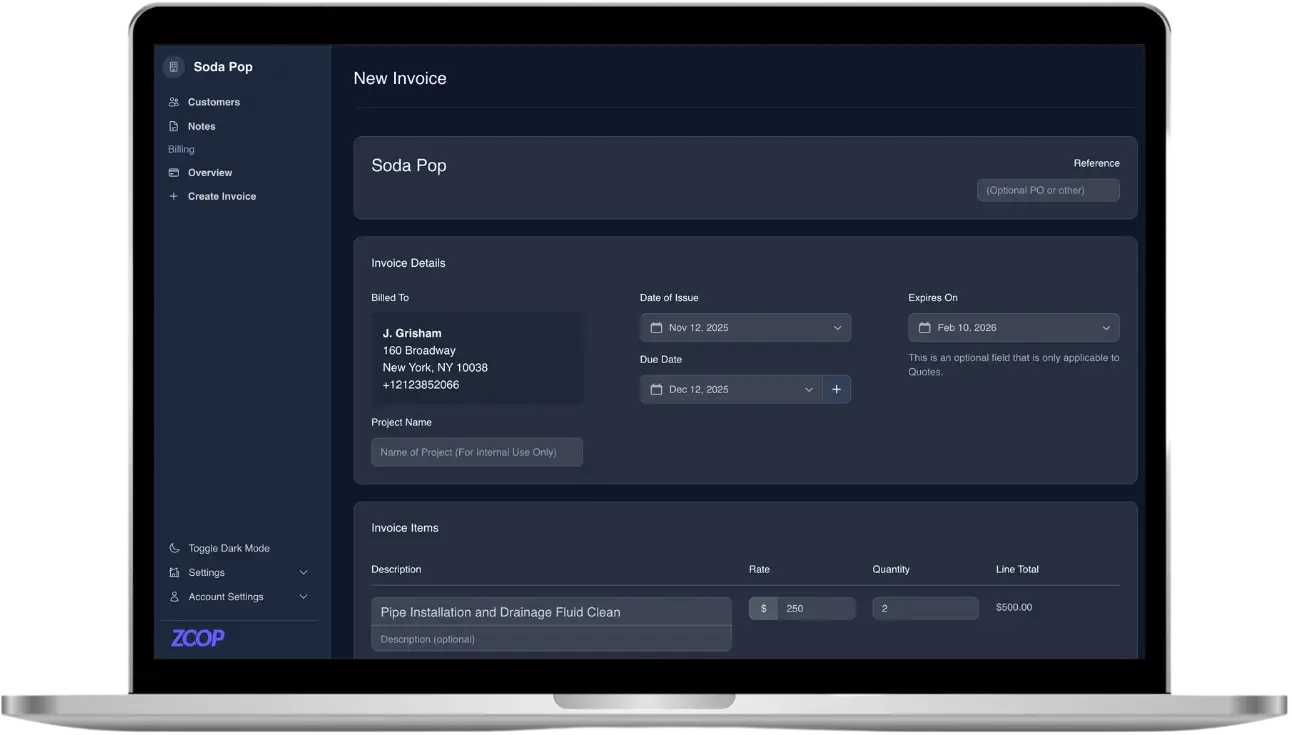
Zoop is billing-first plumbing software: quote on site, schedule the job, invoice straight from a finished job, and get paid by a link the customer taps from their phone. No per-seat fees, nothing to install, free during beta.
Frequently asked questions
How much does it cost to start a plumbing business?
If you already have a van and tools, startup costs are mostly licensing, insurance, registration, and van stock. Buying a vehicle and inventory raises it. Start with what your first jobs need and reinvest your profit.
Do you need a license to start a plumbing business?
In most states, yes — typically a journeyman or master plumber license to operate independently. Requirements vary by state, so confirm with your local licensing board.
Is flat-rate or hourly pricing better for plumbers?
Most successful service plumbers use flat-rate: the customer knows the price up front and you’re not penalized for working fast. Hourly can still fit large or unpredictable projects.
Ready to get paid faster? See how Zoop works for plumbing — free during beta.