
Going out on your own is the fastest way to turn HVAC skills into real money. The calls are the easy part — it’s the business side that trips up most new owners. Here’s how to start an HVAC business in seven steps, without drowning in paperwork before your first service call.
The short version: get licensed and EPA 608 certified, register the business and get insured, set up a truck, price flat-rate to cover your overhead, put a simple system in place to quote and get paid, then go win your first customers and keep the cash moving.
1. Get licensed and certified
Most states require an HVAC contractor or mechanical license, and the steps vary by state. You’ll also need EPA Section 608 certification to legally handle refrigerant. Start at your state licensing board, confirm the journeyman/contractor path, and book your exam early — it’s the longest pole in the tent.
2. Register the business and get insured
- Pick a structure — most solo HVAC owners form an LLC for liability protection.
- Get an EIN and open a separate business bank account. Keep personal and business money apart from day one.
- Carry general liability insurance, and add workers’ comp once you hire. Bonding is often required to pull permits.
3. Set up your truck and tools
You need a reliable van, the core gauges and meters, a recovery machine and vacuum pump, and a small stock of the parts you replace most. Don’t over-buy on day one — add tools as jobs demand them and keep your startup costs lean.
4. Price for profit, not just to win the job
Know your hourly overhead before you quote anything. Flat-rate pricing beats hourly for service work: the customer sees one clear number up front, and you’re not punished for being fast. Build in a diagnostic or service-call fee so a truck roll always pays for itself.
5. Set up the back office before the calls start
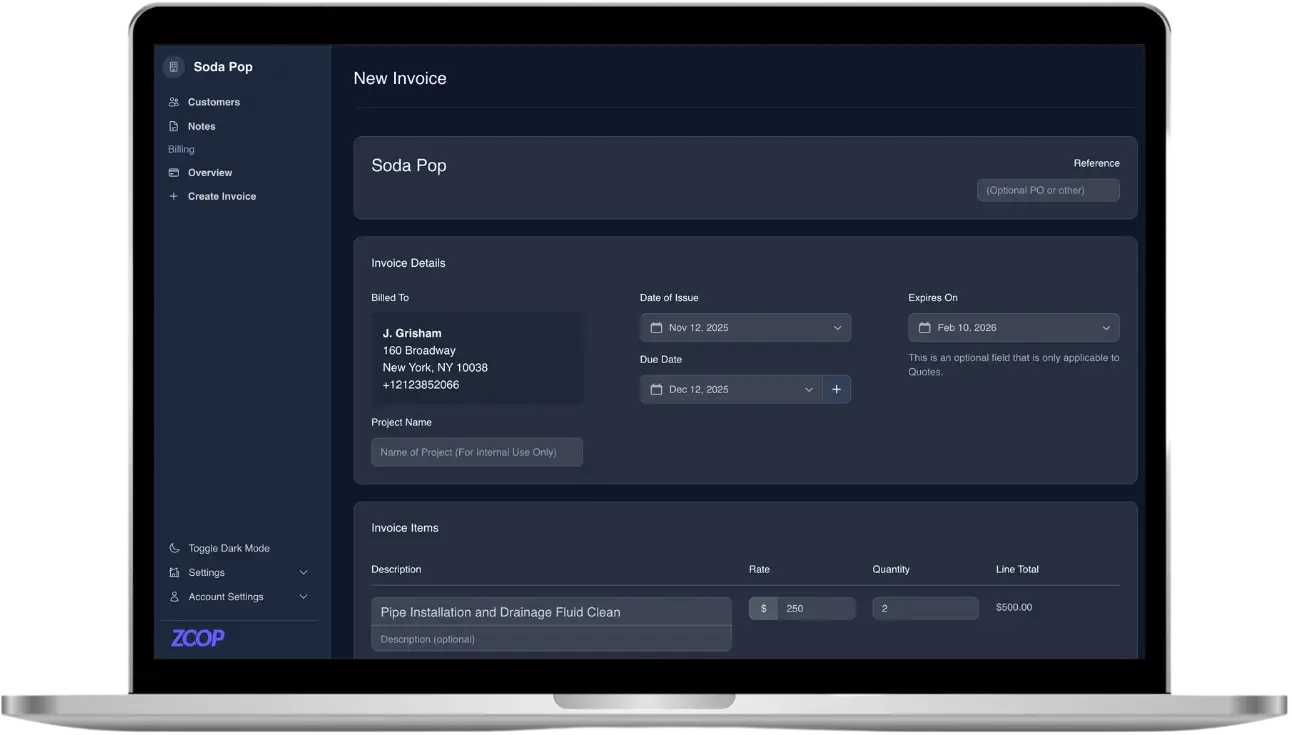
This is where new shops bleed money — quotes that never get sent, invoices that go out late, payments you forget to chase. You need a clean way to quote, schedule, invoice, and collect payment from your phone, between jobs. Get that running before the phone does, not after.
6. Get your first customers
- Set up a free Google Business Profile — it’s how you show up for “HVAC near me.”
- Ask every single customer for a review and a referral. Word of mouth is still king in the trades.
- Offer a maintenance plan. One tune-up turns into a recurring customer and steadier cash.
7. Keep the cash flowing
Invoice the second the job is done and offer to take payment on the spot. Recurring maintenance agreements smooth out the slow season so you’re not starting from zero every spring.
How Zoop keeps the office light
Zoop is billing-first HVAC software that does the office work — quotes, scheduling, dispatch, recurring maintenance plans, invoicing, and online payments — so a one-person shop runs like it has a front desk. No per-seat pricing, nothing to install, and it’s free during beta.
Frequently asked questions
How much does it cost to start an HVAC business?
It varies widely. If you already own a truck and tools, you can start lean — a few thousand dollars for registration, insurance, and certification. A fully outfitted van and stock pushes it higher. Start with what your first jobs actually require and reinvest as you grow.
Do you need a license to start an HVAC business?
In most states, yes — an HVAC or mechanical contractor license, plus EPA 608 certification to handle refrigerant. Requirements vary by state, so confirm with your local licensing board.
How much do HVAC business owners make?
Owner income swings a lot by market, crew size, and how well the office runs. The real leverage isn’t doing more calls — it’s pricing right and keeping your techs billable instead of buried in paperwork.
Ready to run the office side without hiring one? See how Zoop works for HVAC — free during beta.